

[ad_1]
Curry Leaf Plant Care Tips: Curry leaves are such a part of Indian kitchen without which tadka seems incomplete. Be it dal, sambar or any vegetable, the aroma of curry leaves enhances the taste of food manifold. This is the reason why nowadays many people prefer to grow it at home instead of buying it from the market. A curry leaf plant planted in the balcony or terrace is not only useful for the kitchen but also makes the house green. It is believed that the curry leaf plant also helps in keeping mosquitoes and flies away. But many times, due to lack of proper care, this plant slowly starts drying up. The leaves start turning yellow, new buds do not come and the plant starts looking lifeless.
When the plant does not do well despite watering it daily, people get worried. Actually, the curry leaf plant is a bit delicate and if it does not get proper nutrition, it becomes weak quickly. The good thing is that it does not require any expensive fertilizer or chemical. With some easy things present in the house, you can make your curry leaf plant green and dense again.
What does the curry leaf plant like?
Curry leaf plant grows best in nitrogen rich and slightly acidic soil. If the soil is too dry or too wet, the plant gets spoiled quickly. It likes light sunlight and proper air circulation is also important. When there is a deficiency of essential nutrients in the soil, the leaves start turning yellow and growth stops.
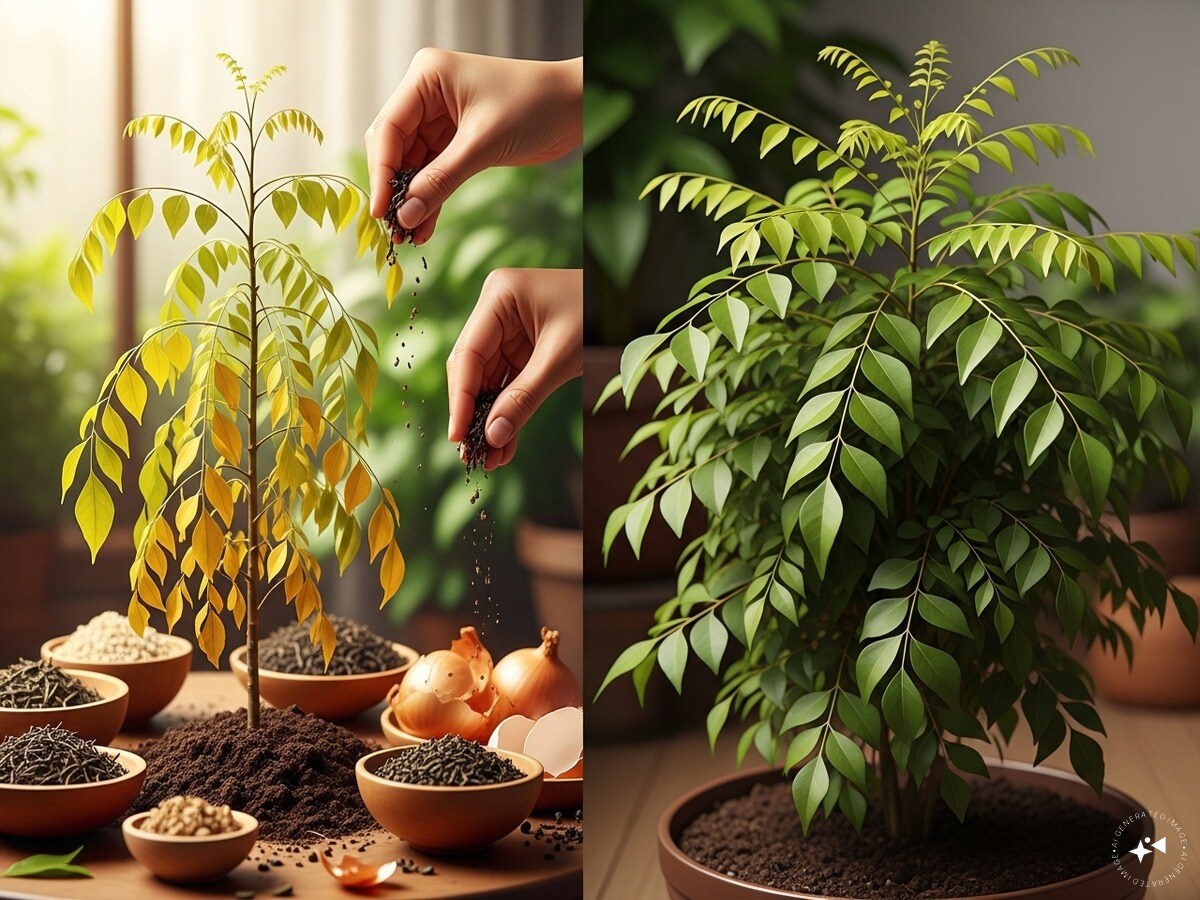
You will get new life from sour buttermilk or curd.
Sour buttermilk or curd is no less than a natural tonic for the curry leaf plant. The elements present in it balance the pH level of the soil and also provide essential nitrogen to the plant. To use it, take a glass of water and add two to three spoons of sour buttermilk or a little sour curd in it. Mix this mixture well and apply it on the roots of the plant once a week. Within a few days, the leaves will start shining and new buds will also start appearing.
Epsom salt will solve the problem of yellowness
If the leaves of the curry leaf plant are turning yellow and falling, it could be a sign of magnesium deficiency. In such a situation, Epsom salt is very useful. Prepare a solution by mixing one teaspoon of Epsom salt in one liter of water. Pour this water into the roots twice a month or spray it lightly on the leaves. Due to this the plant starts looking green and strong again.

Used tea leaves will increase growth
Tea leaves prepared daily at home can be used for plants instead of being thrown away. Tea leaves are a good source of nitrogen, which is essential for the growth of curry leaves. First wash the used tea leaves thoroughly so that the milk and sugar are removed. After this dry it in the sun. Once a month, mix two spoons of dry tea leaves in the soil of the pot. This improves the quality of the soil and new branches start emerging from the plant.
Keep the right balance of sunlight and water
It is not good to keep the curry leaf plant in strong sunlight every day. Keep it in a place where it gets light sunlight for four to five hours a day. Water only when the soil seems dry on top. Excessive watering can cause rotting of the roots and damage to the plant. It is also beneficial to dig the soil lightly every 15 to 20 days.

With proper care, you will get fresh curry leaves for a long time.
If you adopt these easy home remedies regularly, the curry leaf plant will remain green for a long time. New leaves will grow in it again and again and you will not need to buy curry leaves from the market again and again. Home-grown fresh curry leaves not only enhance the taste of food but also give the satisfaction that you are able to fulfill your needs yourself.
[ad_2]

