

[ad_1]
Researchers are slowly learning about gene variations in Latin America, Africa and Asia, hoping to diversify and improve medical treatments. Hidden among subtle genetic differences are clues to why many of us get diseases such as cancer, and how we respond to medical treatments for them. We share 99.9% of human DNA — the sequence of genes, or biological information, that allows us to function and live. But the 0.1% of human DNA that differs in each of us may explain why we have different health outcomes.
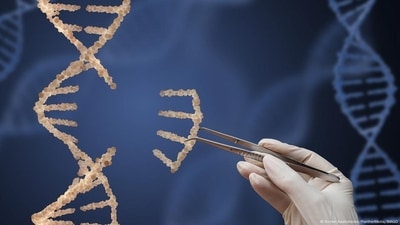
There is a lot of research happening on genetics and genomics because these fields can explain how genes are passed down from generation to generation, and how all our genes together – our genome – make us more or less likely to get a disease. The problem is that more than 80% of genetics studies only include people of European descent. As a result, they represent no more than 20% of the worldwide population. And this is leading to what some experts call an injustice in medicine – or the “genomics gap”.
“There is an injustice in medicine, especially in genetics: we know much more about the genetic basis of diseases in people of European descent than we do in humans of European descent.” [Europeans or US-whites] “There is a greater genetic difference among indigenous peoples than among people of other origins,” said Eduardo Tarazona-Santos, a geneticist at the Universidade Federal de Minas Gerais in Brazil. Tarazona-Santos is working to correct this injustice by collecting data about genetic differences in two indigenous populations in Latin America — one in the Andean highlands and the other in the Amazonian lowlands.
The study, published in the journal Cell, found that subtle genetic differences cause different responses to drugs to treat blood clots and high cholesterol. The genetic differences were as large as those seen between Europeans and East Asians, despite the two groups living only 100 to 200 km (60 to 125 miles) apart. “Our findings emphasize the need to consider that ethnic groups that are often considered homogeneous, such as indigenous peoples of the Americas, are not actually homogeneous,” Tarazona-Santos told DW.
Genetic differences between indigenous groups
Tarazona-Santos’ team analyzed genetic data from 249 individuals from 17 indigenous traditional populations. “We then checked the prevalence of genetic variants that influence response to medications,” said study co-author Victor Borda. They found differences in two specific genes — one called ABCG2 and the other called VKORC1 — between Andean highlanders and Amazonian lowlanders.
“These genetic variants are important because the ABCG2 variant affects the therapeutic success of simvastatin used to treat high cholesterol levels. Individuals who have the ‘wrong’ combination of variants should use a different drug,” Borda said. But they found that only 2% of Andean people would need an alternative treatment to simvastatin, while 14% of Amazonians would need an alternative treatment.
The results also showed that variations in the gene VKORC1 may affect responses to the drug warfarin, which is used to treat blood clots and reduce the risk of heart attack and stroke. “We found that 69% of Andean people and 93% of Amazonian people would need a lower dose of warfarin, because [their having] “This is the VKORC1 genetic variant,” Tarazona-Santos said.
Segun Fatumo, a geneticist at Queen Mary University of London, UK, said the study made it clear why geneticists need to analyse other diverse populations. “There are so many other populations such as [the Andean and Amazonian indigenous people] There are many cases around the world that need to be studied in a similar way,” Fatumo said. Precision medicine can help indigenous communities
Precision medicine uses a person’s specific health data, including their genetics, to tailor medical treatments to their individual needs — rather than the traditional “one-size-fits-all” approach. “This can help us give a person more appropriate treatments based on their genetics, as this study shows with drugs like warfarin,” Fatumo said. But so far, precision medicine using genetic data has overwhelmingly helped people of European descent. Tarazona hopes the new research will bring precision medicine to people of indigenous backgrounds in the Brazilian health system.
This could improve treatments for children with leukemia and avoid adverse drug reactions, or complications from antidepressants and treatments for certain cardiovascular diseases, Tarazona-Santos said.
Non-diverse genomic studies are ‘self-harm’ in science
Fatumo said science had done “self-harm” by not diversifying genomics research more quickly: “There are lots of similar genetic variants that can be found in other populations. They could help find new treatments, and [let us] Understanding why some drugs are more harmful or beneficial for some people and not for others.”
But things are changing. Genetic analyses are underway in Africa and Asia as well as Latin America, often as part of larger programs, such as the Nigerian 100K Genomes Project. And Tarazona-Santos’s group has begun work on a much larger data set, sequencing 60,000 Brazilian genomes from different origins.
New global genetics research has begun to bear fruit. “We have treatments that lower cholesterol and prevent heart attacks. PCSK9 inhibitors were discovered because some individuals of African descent had genetic variations in the PCSK9 gene that caused them to have low cholesterol,” Fatumo told DW, adding that many more such treatments could be discovered by studying the gnomes of people around the world.
[ad_2]

