

[ad_1]
Stroke is one of the leading causes of disability worldwide, with patients often facing significant challenges in regaining functionality and independence. The extent of disability depends on the location and severity of brain damage caused by the stroke.
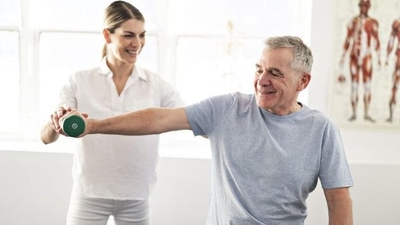
The untold power of physiotherapy
In an interview with HT Lifestyle, Dr Vijay Battina, Centre Head, Atharva Ability – Neurological Rehabilitation Centre in Hyderabad, explained, “Holistic neuro-rehabilitation, including physiotherapy and customised multidisciplinary rehabilitation approach, plays a vital role in helping patients regain motor functions, reduce dependency on caregivers, and enhance the quality of life of patients.”
Neuro-rehabilitation and physiotherapy after stroke focus on a goal-oriented approach to achieve better patient outcomes. Dr. Vijay Battina explains, “Early mobilization within 48 hours of stroke onset has been proven to significantly improve outcomes by encouraging neuroplasticity and preventing complications such as deep vein thrombosis, pneumonia, and pressure sores. Additionally, repetitive training on specific movements and activities of daily living promotes functional recovery in stroke survivors. Advances in technology have enabled a multidisciplinary approach to rehabilitation after stroke. Robot-assisted therapy, virtual reality, aquatic therapy, and functional electrical stimulation (FES) are some of the most recent advancements to accelerate rehabilitation after stroke and complement physiotherapy.”
He elaborates, “Rehabilitation after stroke, in addition to focusing on physical rehabilitation, also involves addressing the emotional and psychological challenges of patients and caregivers. Physiotherapy sessions often involve motivational strategies and goal setting to improve the patient’s mental well-being and boost their confidence. With growing awareness of the importance of holistic neuro-rehabilitation and physiotherapy in stroke recovery, it is essential that caregivers and healthcare professionals advocate for early and consistent rehabilitation efforts to ensure the best possible outcomes for stroke survivors.”
How physiotherapy can get you back on track
Dr Vinay Bhandari, Consultant, Neurology and Neuromuscular Specialist at Jaslok Hospital and Research Centre, Mumbai, shares his expertise, “A stroke is a medical emergency that occurs when blood flow to a part of the brain is disrupted, leading to potential brain damage and life-changing consequences. There are two main types: ischemic stroke, which is caused by a blockage in a blood vessel, and hemorrhagic stroke, which occurs when a blood vessel ruptures. It is important to recognize the symptoms early to minimize damage. When it comes to stroke, every second counts. Immediate medical intervention and/or neurovascular intervention can significantly reduce the impact of a stroke.”
According to him, the main symptoms of stroke include sudden numbness/tingling or weakness, especially on one side of the body, confusion, and sudden problems with vision or balance, sudden difficulty swallowing and difficulty speaking. Dr Vinay Bhandari emphasised, “Rehabilitation is an essential part of recovery, which begins as soon as the patient is stable. The goal of rehabilitation is to help survivors regain independence and improve their quality of life. The process is highly individualised, depending on the severity of the stroke and the areas of the brain affected. It usually involves a multidisciplinary approach, including physical therapy to restore movement and strength, occupational therapy to re-learn daily activities, and speech therapy to overcome communication difficulties.”
Describing stroke recovery as a long process, Dr. Vinay Bhandari assures that “early and consistent rehabilitation can lead to significant improvements, even if the recovery process seems difficult initially. The journey through rehabilitation can be challenging, but with determination and the right support, stroke survivors can make meaningful progress. The sooner rehabilitation begins, the better the chances of regaining lost abilities and improving overall outcomes. Understanding stroke symptoms, seeking immediate medical care, and committing to a comprehensive rehabilitation program are critical steps on the road to recovery, offering hope and improved quality of life for survivors.”
Disclaimer: This article is for informational purposes only and is not a substitute for professional medical advice. Always seek the advice of your doctor for any questions about any medical condition.
[ad_2]
