

[ad_1]
If you experience scaly, red, and itchy scalp, it’s natural to assume it’s dandruff, but it could actually be a sign of scalp psoriasis. Although both conditions can cause scaly scalp skin, their causes, symptoms, and treatments are different.

Understanding the difference is important to find the right approach to managing your scalp health. For those struggling with severely flaky skin and itching, consulting a scalp psoriasis specialist may be crucial for a proper diagnosis and effective treatment plan.
What causes scalp psoriasis?
In an interview with HT Lifestyle, Dr BL Jangid, dermatologist and hair transplant surgeon at SkinCure Clinic in Saket, New Delhi, explained, “Scalp psoriasis is an autoimmune inflammatory disorder in which the immune system mistakenly attacks healthy skin cells, leading to a rapid increase in the number of skin cells. This overproduction of skin cells results in itchy red patches covered with silvery-white scales. Dandruff, on the other hand, is usually caused by an overgrowth of yeast or a reaction to hair care products and is not caused by an immune problem.”
He elaborates, “For people who are dealing with scalp discomfort and excessive flaking, scalp psoriasis removal techniques are more complex than dandruff removal techniques. Scalp psoriasis also has a strong genetic component. If you have a family history of psoriasis, you are more likely to develop this skin disease. Consulting a scalp psoriasis specialist can help you find the right treatment options.”
How to Differentiate Between Scalp Psoriasis and Dandruff
Dr. BL Jangid revealed –
- Scalp psoriasis appears as red, swollen patches covered with thick, silvery scales, while dandruff typically appears as small, white or yellow flakes.
- In scalp psoriasis, the skin appears thick and has a white or silvery sheen, while dandruff flakes are finer and more powdery.
- Both conditions can be itchy, but scalp psoriasis may also cause a burning or tingling sensation on the scalp.
- Scalp psoriasis sometimes causes thinning or temporary hair loss, which is much less common with dandruff.
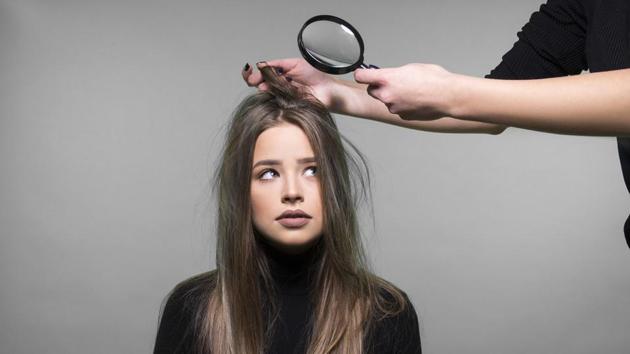
In a list of tips to differentiate between scalp psoriasis, Dr Shivani Yadav (MBBS, MD DVL), dermatologist and founder of Skin Avenue Dermatology Clinic in Gurugram, said –
1. Underlying causes
– Scalp psoriasis: This is an autoimmune condition in which the immune system mistakenly targets healthy skin cells, speeding up their growth cycle. This rapid change results in the formation of thick, scaly patches on the scalp.
– Dandruff: Dandruff is usually associated with excessive growth of the Malassezia fungus on the scalp. Other factors such as oily scalp, irritation or sensitivity to hair products may also contribute.
2. Appearance
– Scalp psoriasis: Thick, red patches on the skin that are covered with silvery white scales. These patches are clearly defined and may spread beyond the scalp to areas such as the forehead, neck or behind the ears.
– Dandruff: flaky, white or yellow scales that are usually loose and can be easily brushed off. These scales are usually smaller and less inflamed than those caused by psoriasis.
3. Location
– Scalp psoriasis: It can cover the entire scalp and often spreads to other parts of the body such as the elbows, knees or back.
– Dandruff: This is restricted to the scalp, mainly on the top of the head and around the hairline. It usually does not spread beyond the scalp.
4. Itching and burning
– Scalp psoriasis: Itching is often intense and may be accompanied by burning or pain, sometimes becoming so severe that daily life is disrupted.
– Dandruff: Usually mild, with some itching, but it rarely causes significant discomfort.
5. Seriousness
– Scalp psoriasis: Its severity can range from mild to severe, and flare-ups can make symptoms worse. In severe cases, persistent itching and inflammation can lead to hair loss.
– Dandruff: This is usually mild and is considered a cosmetic problem rather than a medical concern. It rarely causes permanent damage or hair loss.
6. Triggers
– Scalp psoriasis: Common causes include stress, infection, medications, skin injury, cold weather, and alcohol.
– Dandruff: This problem is often caused by oily scalp, uncleanliness, dry skin, stress or overgrowth of Malassezia yeast.
Treatment Options for Scalp Psoriasis
According to Dr. BL Jangid, there is no way to prevent scalp psoriasis, but if you are experiencing symptoms, it is important to visit a board-certified dermatologist for accurate diagnosis and scalp psoriasis treatment. Here are some common treatments he recommends –
- topical treatmentMedications such as corticosteroid creams, medicated shampoos, and ointments are often the first line of scalp psoriasis treatment to reduce inflammation.
- PhototherapyIn cases where topical treatments are not sufficient, controlled exposure to ultraviolet (UV) light under medical supervision may be an effective option to slow the rapid growth of skin cells.
- Systemic drugsIn severe cases where topical treatments and phototherapy do not provide enough relief, oral or injected medications may be prescribed to regulate the immune system and manage scalp psoriasis symptoms.
- Lifestyle changesMaintaining good scalp hygiene, managing stress, avoiding harsh hair products, and following a healthy diet can significantly help in controlling hair follicles. Scalp Psoriasis symptoms.
Dandruff treatments often include over-the-counter shampoos that help remove dandruff. While these treatments can ease the discomfort, persistent dandruff may require a specialized approach from a dermatologist.
Offering her expertise, Dr. Shivani Yadav said that scalp psoriasis usually requires a prescribed treatment, which includes:
- topical corticosteroids
- Vitamin D analogues
– Coal Tar Shampoo
– Biological drugs for severe cases
– Phototherapy (UV light therapy)
As for dandruff, Dr. Shivani Yadav said it can be treated with over-the-counter (OTC) solutions, such as:
– Anti-dandruff shampoos containing zinc pyrithione, ketoconazole or selenium sulfide
– Maintaining proper scalp hygiene
Limit the use of hair products that can irritate the scalp
Dr. Shivani Yadav said, “Although scalp psoriasis and dandruff have some similarities, they are two very different conditions. It is important to get an accurate diagnosis from a medical professional to identify the exact cause and find the right treatment. If left untreated, scalp psoriasis can lead to further complications, while dandruff can get worse over time. Make sure to consult a scalp psoriasis specialist or a dermatologist for proper dandruff treatment.”
8. Chronicity
– Scalp psoriasis: a lifelong condition that requires ongoing management, with varying periods of flare-ups and remissions.
– Dandruff: This is a frequent problem, but is usually easier to manage and less persistent than scalp psoriasis.
Dandruff can be easily controlled with OTC treatments. Psoriasis causes an itchy skin condition that can come and go throughout your life. It is related to an overactive immune response and is not contagious. If you have skin changes that don’t go away, talk to your dermatologist for a proper diagnosis and tailored treatment plan.
Disclaimer: This article is for informational purposes only and is not a substitute for professional medical advice. Always seek the advice of your doctor for any questions about any medical condition.
[ad_2]

