

[ad_1]
According to the Cleveland Clinic, the Mediterranean diet is not, technically, a diet, even though it’s great for weight loss and may reduce the risk of heart disease and many other chronic conditions. It focuses on nutrient-rich foods like vegetables, fruits, whole grains, legumes and healthy fats, while limiting processed items and saturated fats. Read this also NHS surgeon explains why he eats 50g of fiber a day

What Is The Mediterranean Diet?
NHS surgeon Dr. Karan Rajan explained on Instagram on November 2 that the focus on eating healthy foods in moderation, rather than giving up entire food groups like carbs, makes the Mediterranean diet easier to follow.
And if you think the Mediterranean diet, which borrows from all the cuisines of the region – Greek, Italian and North African – is a high-cost option, Dr Rajan has shared a guide to adopting this diet in a way that is both ‘realistic’ and affordable.
According to Dr. Rajan: “The Mediterranean diet is not about specific foods, but about eating patterns and food groups as a whole. So, choose what is practical and sustainable for you… If you want to eat the Mediterranean diet, but in a realistic and budget-friendly way, here’s what you can do.”
Practical Tips for Following the Mediterranean Diet
Dr. Rajan outlines specific daily and weekly intake goals for different food groups, focusing on budget-friendly options like frozen vegetables. From at least two servings of vegetables daily and three servings of fruit to several weekly servings of legumes, fish (including oily varieties), and nuts, here’s everything you can do to follow a ‘realistic Mediterranean diet’:
1. Eat at least two servings of vegetables a day and one serving is around 80 grams, the easiest and cheapest way to do this is with frozen mixed veggies.
2. Count on at least three servings of fruits a day, including canned and frozen fruits.
3. At least four tablespoons of extra virgin olive oil per day, and you can use it to cook vegetables, drizzle on salads, and even dress breads and pasta.
4. At least three servings of beans a week, and a serving is about 150 grams or half a can. And cooked beans count.
5. Have at least three servings of fish a week and at least one of those servings should be oily fish. Things like tins of sardines and mackerel in olive oil are inexpensive and rich in omega-3s.
6. Two to three servings of whole grains a day. This whole food is equivalent to a slice of bread, half a cup of cooked whole wheat pasta and even half a cup of oats.
7. At least three servings of nuts a week, each serving about 30 grams.
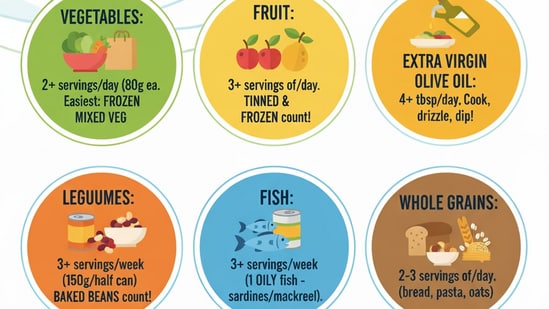
In her caption, she wrote: “The realistic Mediterranean diet! You don’t need to get stuff from Sicilian farmers or Athenian food markets…canned and frozen food count! The Mediterranean diet is not about specific foods but about food groups and eating patterns over time!”
Note to readers: This report is based on user-generated content from social media. HT.com has not independently verified the claims and does not endorse them.
This article is for informational purposes only and is not a substitute for professional medical advice.
[ad_2]

