

[ad_1]
To understand silicone, it is helpful to think of this substance as a group of teenagers who are forced to attend a family function. They have no interest in engaging with anything around them. They gather together and stare obnoxiously at everyone who comes near.
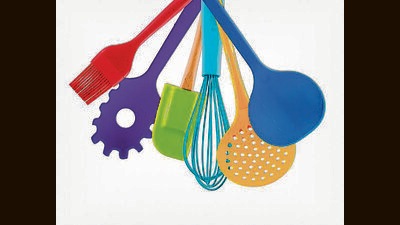
In the case of teens, it seems to be hormonal (or so it is hoped, since at least that means it will go away.)
In the case of silicon, the indifference and resistance come from the fact that the silicon-oxygen chains at the core of such compounds are extremely stable. Breaking those bonds requires a lot of energy.
This is why the material is chemically inert, as well as being water-resistant, flexible and able to withstand extreme temperatures (ranging from 230°C to -60°C).
The strong yet flexible chain is what makes silicone spatulas and molds so flexible, allowing them to easily shape and then release everything from cupcakes and chocolates to ice cubes. Even when heated, this material doesn’t react with acids and doesn’t stick to food, making it ideal for whisks, spatulas, and bakeware.
The popularity of this material must have surprised Frederick Stanley Kipping, the English chemist who coined the term in 1905 and was a pioneer in the field, having created many such polymers. He did not think much of them; he dismissed the material, in fact, as a “sticky mess.”
Corning Glass Works first saw its potential in the 1930s. The company was looking for a new material that was more heat resistant than plastic and more flexible than glass. Silicone polymers were perfect for the job, and Corning began using them as sealants in glass and electrical equipment.
In the 90 years that followed, the compound has been used in medical implants, hair conditioners, lotions, serums, and even silicone-rubber shoes worn on the moon.
Now a little discussion on silicon vs. silicone. While many people think this is a matter of U.K./U.S. spelling differences, this is not the case at all.
Silicon is a naturally occurring element. It is found in the human body as trace elements and combined with oxygen as silicates in materials such as quartz and sand.
Silicone is a man-made substance consisting of silicon and oxygen atoms bonded together (as siloxanes), which then attach to different chemical groups to form a number of compounds.
Add glues, resins and rubber to siloxane and get super-flexible polymers. Add some chemicals and create a fluid that blends easily into lipsticks, lotions and serums, making them stick better to skin and hair and giving them a glossy texture.
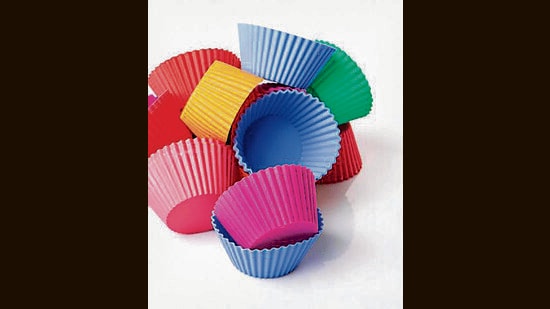
Back in the kitchen, parchment paper is now sprayed with this stuff (which is why our cookies don’t stick like our mother’s cookies). And silicone mats make it much easier to shape and set sticky jaggery chikki or caramel candy. Once cooled and hardened, it just peels off. There’s no long goodbye… I’m looking at you, aluminum foil.
But every material has a weakness. Silicon’s kryptonite is vapors. Its pores absorb odors and stick to them. Cook dal in a cooker with a silicone gasket and then make kheer in the same cooker (even the next day), and you can expect the aroma of the dal to linger in the dessert. So mixed use can cause problems.
However, its biggest disadvantage is that this material is not biodegradable. Environmental studies show that it is better than single-use plastic (which is not saying much). But don’t substitute wood, glass or metal for this twisted dark knight if you can.
And if you must buy something, hold on to it; pass it on. It’s not going to break anyway.
(For questions or feedback to Swetha Sivakumar, email upgrademyfood@gmail.com)
[ad_2]

