

[ad_1]
Ever wondered what happens when you flush a public toilet toilet? It turns out, it does not just rotate the water under the drain, it is also sending a cloud of invisible bacteria to the air. A recent study suggests that each flush releases germs-laden drops that can cause health risk, and some toilets design make it even worse. (Also read: Stop infection before starts: Safety tips should be known for women using public toilets ,
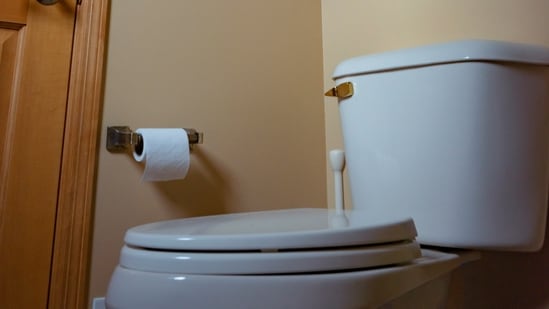
How toilets spread air bacteria
Researchers at the China University of Geochenses investigated how various toilets and ventilation systems affect the spread of airborn bacteria. He focused on the two general convicts, Staphylococcus aurus, often found on the skin and in airways, and e. Coli, a bacteria that normally lives in the intestines. Conclusions can only rethink you on your next toilet trip.

A study in risk analysis found people with biddet-style compared to squat toilets, finding that squat toilets spread more bacteria-2.6 times more s aerous and 1.4 times more e. Coli. The design of the squat toilet, with their low height and small bowl walls, allows more droplets to survive. Surprisingly, a second flush can release even more bacteria – 1.8 times more s anureus and 1.4 times more e. Kololi – Instead of decreasing, rather than decreased, rather than exposed to harmful germs.
Why the size of particles and ventilation matters
The size of these air water drops plays an important role in health risks. Researchers found that most bacteria loaded with bacteria were subject to 4.7 micrometers, which are sufficient to stay suspended in the air and breathed deeply into the lungs. S. About 55–70% of the aerus and E. 52–62% of coli drops belonged to this category.
Ventilation proved to be a game-changer. Running exit fans reduced the airborne bacteria to 2.2 times, exposing the importance of airflow in public toilets. Dangerous, in many scenarios, bacterial concentrations exceeded the WHO safety guidelines, especially presenting the risks of infection for people with weaker immune systems. However, with proper ventilation, these risks declined significantly.
Simple changes can reduce health risks
Since public toilets experience heavy legs traffic, even small changes can reduce health risks significantly.

- Squat toilets for bidet-style options may reduce the spread of swapping bacteria.
- Keeping the ventilation system in the top shape can dramatically reduce airborne bacteria.
- Rethinking the habit of many flush can prevent unnecessary bioerosol release.
Lead writer Wajid Ali, a PhD student in environmental studies at China University of GeoSyinses, emphasizes risks: “” Effectively raising ventilation systems by optimizing exit fan efficiency and air exchange rates effective Can reduce ,
How to be safe in public toilet
If you are using a public toilet, take some easy precautions to reduce the exposure in the study:
- If possible, choose a stall with good ventilation.
- Avoid multiple flush as long as it is fully necessary.
- Wait for a few moments before entering the stall if someone simply flushed.
This research highlights how regular action like flushing can also lead to unexpected health risk. As public places develop, it is important to identify and address all these invisible hazards.
Note the readers: This article is only for informative purposes and is not an option for professional medical advice. Always consult your doctor with any question about a medical condition.
[ad_2]

