

[ad_1]
Fashion designer Camilo Morales has upcycled everything from plastic shopping bags to fabric scraps, turning them into bags, clothing and accessories. His latest raw material is vinyl political ads for candidates in Mexico’s local, state and federal elections, which were held on Sunday. Winners included former Mexico City Mayor Claudia Sheinbaum, who will be the country’s first female president. For the past year, Morales has been removing the ubiquitous banners, cutting them up with scissors and sewing them into tote bags, which he sells for between 100 pesos ($5.44) and 600 pesos ($32.63).
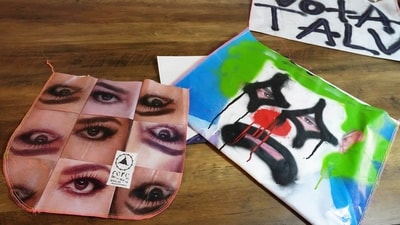
“This election season was ridiculous,” Morales said. “They started (putting up ads) so early.” On Morales’ cheapest bags, sold under his label Rare, most of the ads have a completely white background. The most expensive bag is a collage of the heavily shadowed eyes of Clara Brugada, the ruling party’s candidate to be Mexico City’s next mayor. “I joke that they practically grow on trees,” Morales said. “At night I would take down an ad, and the next day there would already be another one to take its place.”
Under election law, political parties have four days to remove their ads after the polls end, and workers were removing them this week. In Mexico City alone, political campaigning generated an estimated 10,000 tons of waste this season, according to Juan Manuel Nunez, a professor at the Iberoamerican University. The banners bear logos that declare them recyclable, but it was unclear how many were actually being recycled.
“Although they are touted as environmentally friendly, these banners and tarps are usually made of PVC, which can take hundreds of years to decompose,” said Nunez. Other attempts to find new uses for the ads included a TikTok user who went viral for turning them into dog beds and migrants who have turned them into tents. ($1 = 18.3900 Mexican pesos)
[ad_2]

