

[ad_1]
There are countless reasons to drink alcohol on a plane. For many travelers, drinking alcohol can help celebrate the beginning or end of a vacation. Some people find that they sleep better after drinking a glass of wine. Others say that alcohol helps reduce nervousness during the flight. (Read this also | Too much exercise in summer can make you sick; know about the side effects of excess exercise,
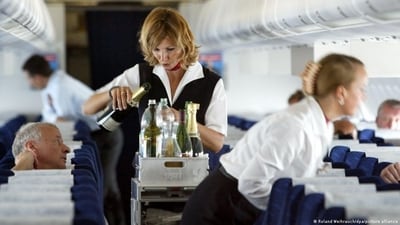
But a new paper published by researchers at the German Aerospace Center (DLR) and RWTH Aachen University shows that beverages in the clouds could pose a significant health risk, especially for elderly travellers or those with medical conditions.
Less oxygen, higher heart rate
Artificial pressure is created in the aircraft cabin during flight. This does not correspond to the air pressure at sea level, but at an altitude of about 2,500 meters. It is like being on top of a medium-sized mountain.
The higher the altitude, the lower the air pressure. The lower the air pressure, the lower the oxygen saturation in the blood. According to the study published in the journal Thorax, healthy oxygen saturation is around 90%. When it drops below this, the muscles and organs stop getting the amount of oxygen they need, as the body is trying to send the oxygen it has to the brain.
Lack of oxygen can cause dizziness or nausea. Sensitive travelers may begin breathing more deeply or faster than normal. Lack of oxygen can also occur if the heart rate increases during sleep due to drinking alcohol.
Oxygen supply decreases in intoxicated people
For the study, 48 test subjects were divided into two groups: One group was tested in a sleep lab with normal ambient pressure, and the other group was tested in an altitude chamber with air pressure similar to that of an airplane cabin.
Some test subjects in each group drank alcohol before bedtime and some did not.
The study showed that the average heart rate of intoxicated test subjects in the simulated plane cabin increased by 88 beats per minute while sleeping. Their oxygen saturation levels dropped to about 85%.
Their average heart rate was higher than that of participants in the control group, and their oxygen saturation levels were lower.
At first glance, this difference may not seem so serious. However, the authors wrote that the negative effects were clearly visible even in very young and healthy test subjects.
For older or sick people, low oxygen saturation and a significantly increased heart rate can be life-threatening.
Should alcohol be banned on airplanes?
The question of whether alcohol should be banned on flights has been debated for decades.
This study, which is certainly not the last of its kind, does not allow for any direct conclusions – the test group was very small, very young and very healthy. In addition, the participants slept lying down.
Still, researchers hope this study will encourage more research on the topic.
The study results indicate that drinking alcohol and sleeping during a flight “places significant stress on the cardiovascular system, even in young and healthy people,” the authors wrote. And, in older people or those with heart or lung diseases, symptoms may be even more severe.
The researchers advocate changing existing rules on airplanes and restricting alcohol consumption on board.
Source:
Effects of moderate alcohol consumption and hypobaric hypoxia: effects on sleep, oxygen saturation, and heart rate of passengers on long-haul flights, 2024.
[ad_2]

