

[ad_1]
agency:Agencies
Last update:
Scientists have revealed that Mercury planet is slowly shrinking. Its radius has so far decreased by 2.7 to 5.6 kilometers. The reason for this is the cooling of the core and cracks on the surface.


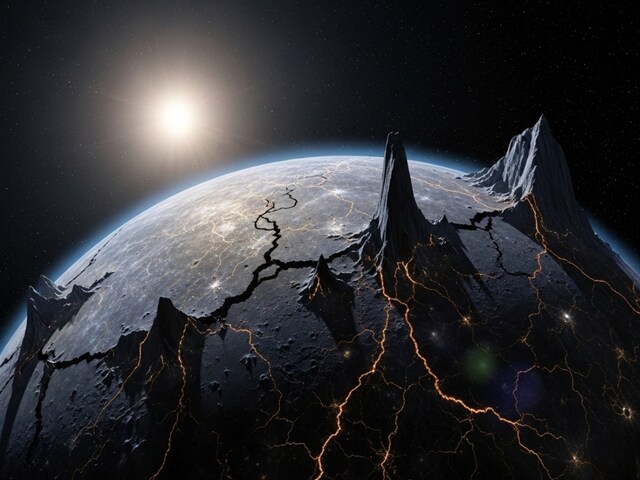 According to scientists, in the last several years, Mercury planet was 11 kilometers smaller.
 According to the new study, the radius of Mercury has been reduced from 2.7 to 5.6 kilometers so far. Earlier it was estimated that it would shrink between 1 and 7 kilometers, but at that time the figures were not so sure. This time, the technique that scientists have adopted, have got more accurate information than that.
The inner part of Mercury, ie its core is mostly made of iron. For billions of years this part has been gradually cooled. When the core cools down and shrinks, there is pressure on the top surface i.e. crust. Due to this, the surface slips and there are big cracks. In many places standing rocks are formed which are called ‘Scarps’. These marks on the surface of Mercury clearly suggest that the planet is changing from inside.
How was research done?
Earlier scientists used to guess only by seeing the height and length of the cracks made on Mercury, but there was a lot of scope for the mistake. This time scientists used three big datasets which contained thousands of faults. The largest and effective faults of these were selected and investigated deeply. As a result, Mercury has shrunk about 2 to 3.5 kilometers from only faults. And if you add the effect of cooling of the core and mantle, then the total shrinkage reaches 5.6 kilometers.
Now the question is that the earth is also getting cold, so why does it not look like this? The reason is that the size of the earth is large and there is still a lot of heat left inside it. From the top, the plate tectonics on the earth is constantly stirred. Therefore, the shrinking of the earth is very slow.
At the same time, Mercury is small and the amount of iron is high in it. Iron loses heat quickly, so the core of Mercury is cooling fast and shrinking. Scientists say that since its beginning, the total diameter of Mercury has decreased by about 11 kilometers.
Cracks and rocks on the surface of Mercury make us feel like reading the diary of his land. Changes of billions of years are recorded in them. This research helps in understanding not only the story of Mercury but also Mars and other planets.
Scientists believe that Mercury is the most important example to understand how small stony planets are formed, cold and change their face in billions of years.
[ad_2]

