

[ad_1]
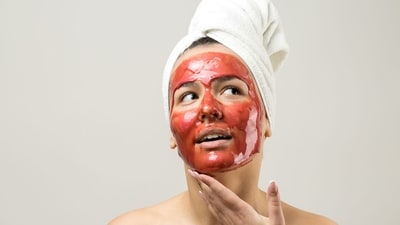
Period blood on your face? Yes, this is a real trend taking over social media feeds. Called menstrual masking, the DIY ritual involves swiping your menstrual blood across your cheeks for a few minutes and washing it off as if it were just another serum. Influencers claim it’s “nature’s retinol,” arguing that menstrual fluid is rich in stem cells, proteins, and cytokines that enhance radiance, repair skin, and relieve inflammation.
A study published by the National Library of Medicine, the world’s largest biomedical library run by the United States, found that plasma derived from menstrual fluid can actually aid tissue repair and wound healing. In this research, scientists tested how stem cells obtained from menstrual blood performed on wounds. Wounds healed faster, more blood vessels grew, collagen was formed better and healthier skin regeneration was observed compared to wounds treated with regular keratinocytes and fibroblasts.
In other words, menstrual stem cells can accelerate healing… when purified, processed and delivered through a sterile biomedical dressing. Not when it’s taken out of a menstrual cup and spread over your T-zone.
Which brings us to the skipping part of your social media feed: exposure. Period blood is not sterile. Applying it on a face with open pores, minor pimples or active acne can introduce bacteria and cause infection. Its pH can disrupt your skin barrier, causing irritation, breakouts, or dermatitis. There are no guidelines for how long to leave it on, how much to apply, or how often to do it, as the practice is not medically approved or studied on real human faces.
Menstrual masking may be the internet’s favorite shock-value skincare moment, but for now, let’s leave the DIY period facial.
[ad_2]

