

[ad_1]
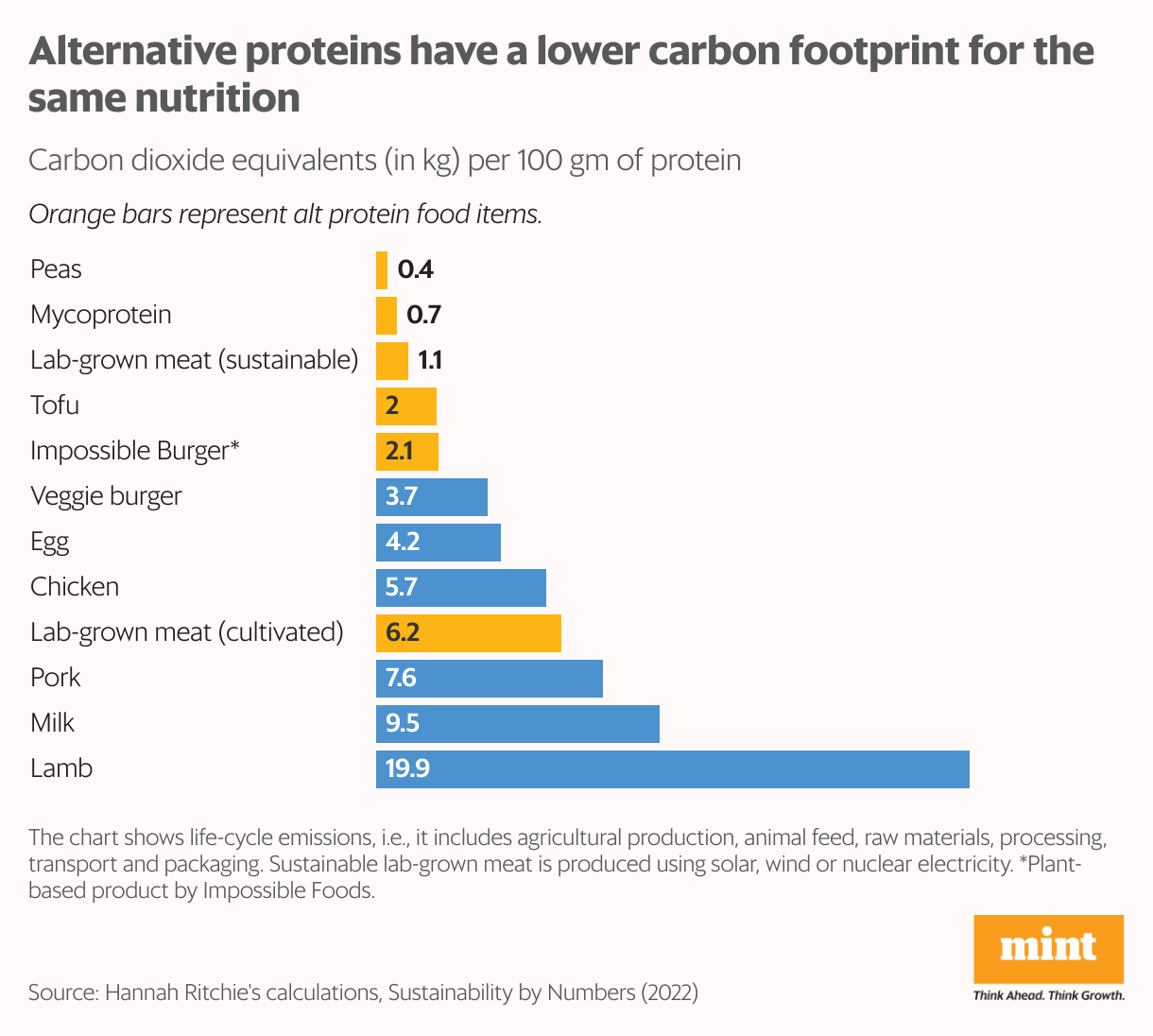
Alternative or smart proteins, also called alt proteins, are proteins extracted from unconventional sources (such as algae, fungi or insects), or produced using new methods (fermentation, laboratory cultivation of cells). This broad term also includes plant-based proteins, which have been on the market for decades. They mimic the taste and nutrition of dairy, meat and seafood without actually breeding animals. Policies that support alternative proteins can help the push for net zero: plant-based meat production uses 72-99% less water and 47-99% less land, causes 51-91% less water pollution and produces 30-90% fewer greenhouse gas emissions, shows data from the Good Food Institute (GFI) India, a think tank.
Also read: Diet dilemma: Why is it a struggle to eat right in India?
Safe and durable
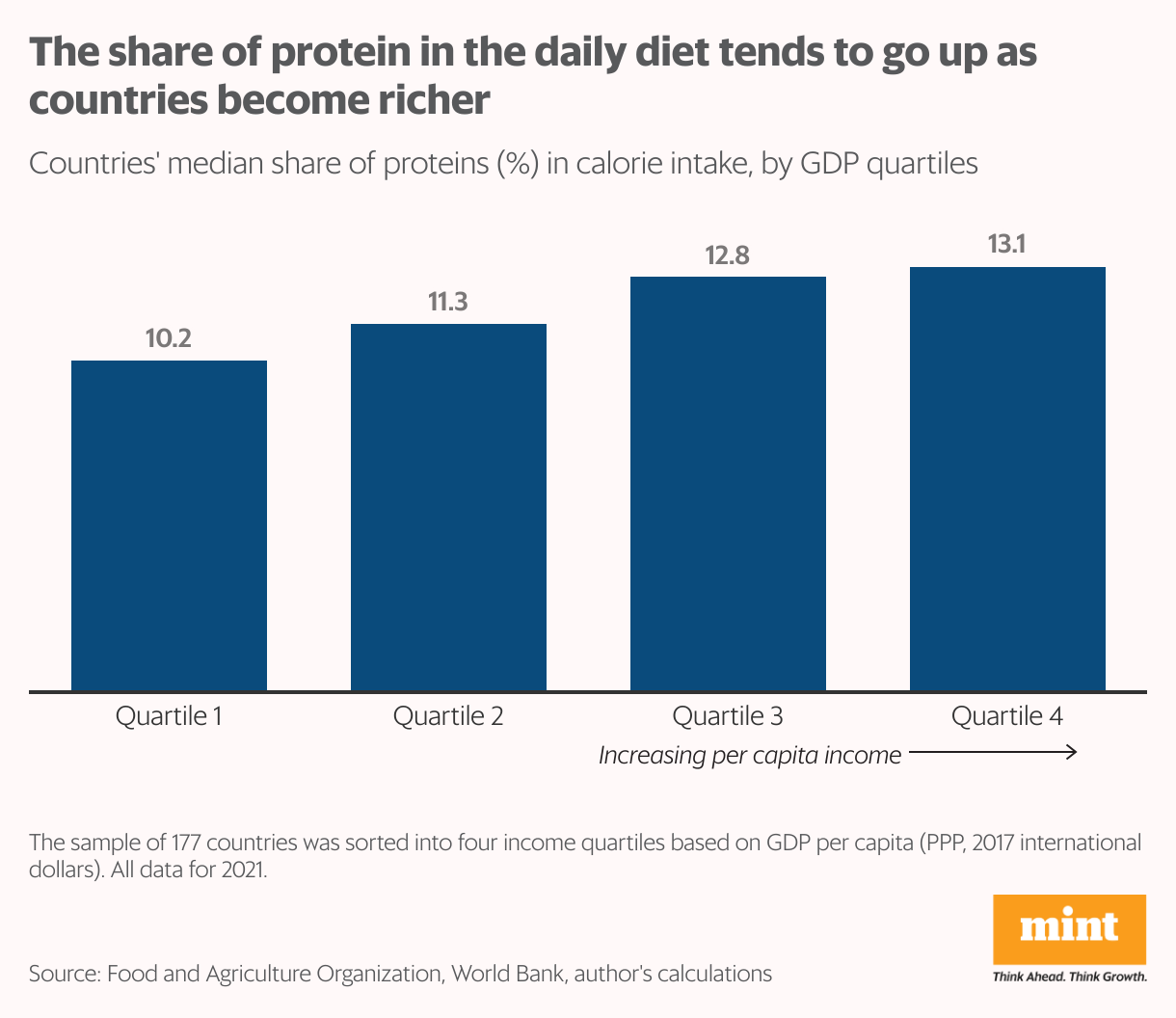
As people become wealthier, they increasingly meet their calorie needs from protein. For India, the share of protein in calorie consumption increased from 9.7% in 1991 to 11% in 2021, in step with rising incomes, according to calculations done by Our World in Data using Food and Agriculture Organisation figures. Alt proteins are a sustainable way to meet this growing protein demand. They provide food security (no risk of zoonotic disease from animal meat), and many consider it a more humane and ethical way to consume protein. Plant-based alt proteins are culturally compatible with many Indian cuisines, which have vegetarian protein items such as dals, paneer or legumes as the main meal.
Market and demand
Plant proteins such as soya chaap, nuggets or soya milk have been available on the market for decades. Still, according to the GFI-Deloitte Smart Protein Economic Analysis, the domestic market remains small at around $45 million in 2022. But it is growing rapidly: by 2030, it is projected to be worth between $946 million and $2.4 billion.
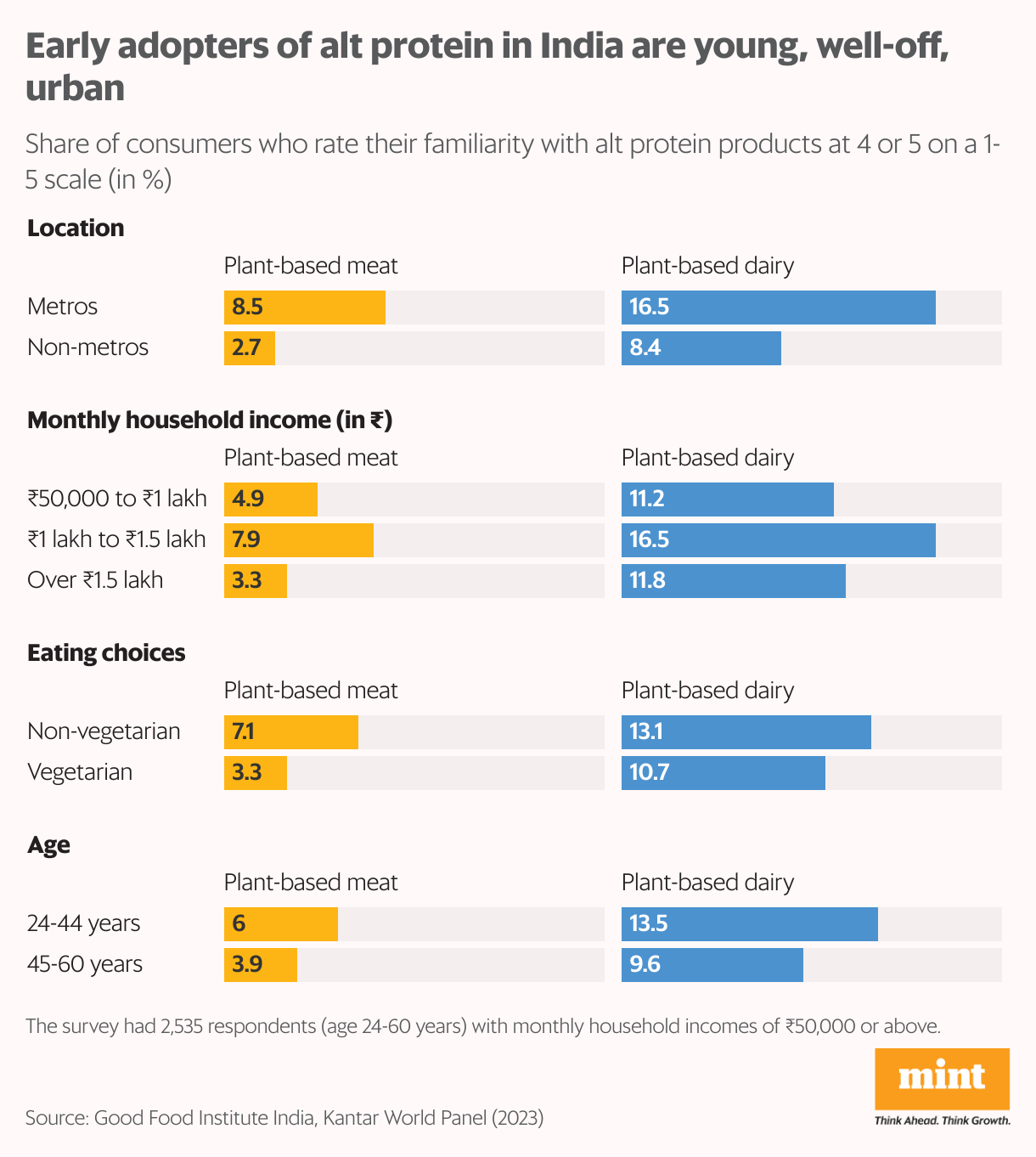
Demand for non-animal proteins surged during the pandemic, when households embraced healthier food options. GFI India counted 377 such products across 41 formats and 73 brands expected to be available in stores, online and in restaurants in India by 2023. The GFI-Kantar survey of urban households revealed that there is greater familiarity with plant-based dairy and meat in metros, among younger people, non-vegetarians and higher-income households. This demographic is also one of the early adopters of alternative protein products.
Barriers to adoption
The main barriers to adoption are taste, texture and price. Unlike Western markets, where burgers with plant-based patties are the main product, Indian consumers demand a wide variety, from unflavored protein powders to exotic tikkas, biryanis and kebabs. Also, we like dairy products: most consumers would opt for regular paneer in a plant-protein burger. Thus, a completely vegetarian product in India finds fewer takers than in the West, where vegetarian often means vegan.
Also read: The number of Indians going hungry has decreased. But are they eating healthy food?
Texture is another issue: alternative meats may not be “meaty” enough for carnivores, or too meat-like for vegetarians. To find the right balance, companies offer products based on different ingredients such as jackfruit (Wakao), soy (Shaka Harri) or peas and quinoa (GoodDot).
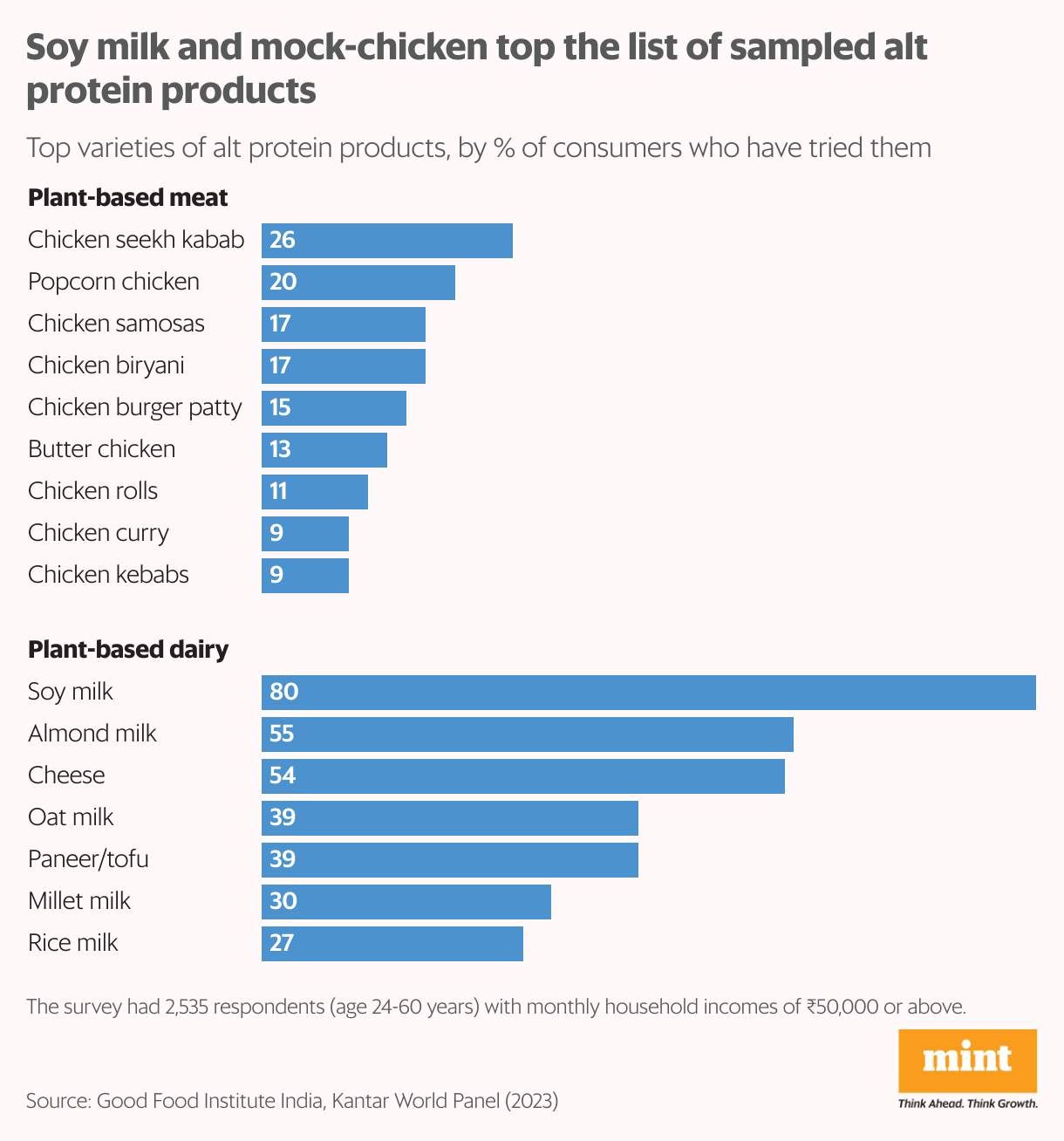
The surveys reveal other consumer preferences: soy milk and almond milk are the most familiar in the alternative protein spectrum, while imitation chicken tops the tests in the plant meat category. This suggests that plant milk and chicken alternatives could be good entry points for consumers.
Price is a key issue, especially as new protein products are seen as luxuries rather than necessities. For the budget-conscious consumer, a pound of fresh paneer ( 150-200) or Chicken ( 170-250) would be better value for money than fake chicken nuggets ( 450 or more).
Export opportunities
The expanding global market for plant-based proteins also offers India many export opportunities. As a leading global producer of chickpeas, lentils, millets, peas, rice and soybeans – all of which are sources of plant proteins – India can establish itself as a top supplier of inputs. The market for nutritional additives such as protein concentrates, isolates and flours also has huge potential.
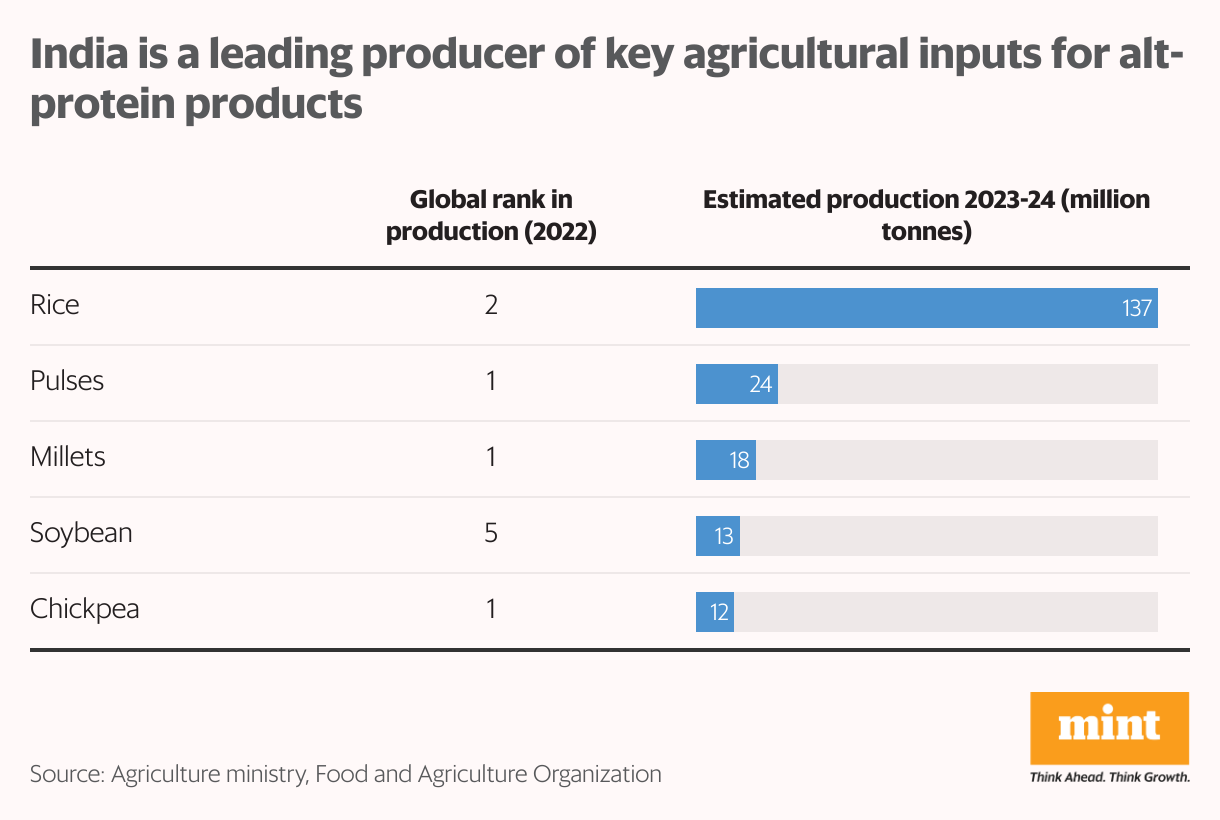
Indian ready-to-eat protein products are already being exported around the world. In 2023, Shaka Harry’s range of plant-based meats debuted in Singapore’s iconic Mustafa supermarket, and GoodDot entered the US in partnership with ADF Foods Ltd. With its large arable land area, plentiful agricultural labour and distinctive flavours, India has the potential to create an alternative protein manufacturing ecosystem.
A Smart Protein Campaign
Changing domestic consumption patterns will require time and deliberate effort. Indian manufacturers already offer innovative products in local tastes. Partnering with cutting-edge alternative protein firms in innovation hubs such as Singapore can help improve taste and cut costs.
The government has done its part by recognising the potential of alternative proteins and providing a supportive policy environment. A possible next step is to launch a campaign on social and news media to spread awareness and correct misinformation. To bring millennials and Gen Z on board, alternative proteins need to be not just healthy but trendy too. In the 1980s, the National Dairy Development Board introduced eggs as a versatile and fun food with its ‘Roz Khao Ande’ campaign. Amul did the same for milk in the 1990s with ‘Piyo Glass Full Doodh’. Perhaps now is the time to create a reel that appeals to all demographics and encourages greater consumption of alternative proteins.
The author is a freelance writer in economics and finance.
[ad_2]

