

[ad_1]
New research from Sweden’s Karolinska Institutet shows how estrogen protects against MASLD, a fatty liver disease that has grown rapidly during the obesity epidemic. The study, published in the journal Molecular Systems Biology, demonstrates how a new drug under development could become a future treatment for fatty liver disease and liver cancer.
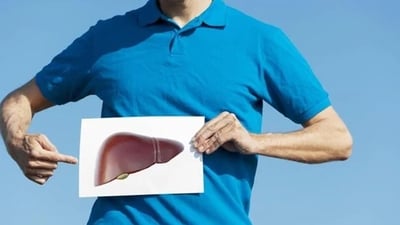
The global obesity epidemic has resulted in a dramatic increase in fatty liver, a disease in which fat that does not fit into fat cells accumulates in liver cells.
Since last year, fatty liver caused by obesity (and not excessive alcohol consumption) has become known as MASLD (Metabolic Dysfunction-Associated Steatotic Liver Disease). According to previous research, one in three adults is affected by MASLD to some degree, which can develop into cirrhosis and liver cancer in the worst cases.
Women remain safe until menopause
However, the disease is very unequally distributed between the sexes, with the majority of affected individuals being men.
“Women have natural protection until menopause due to the female sex hormone estrogen,” explains Claudia Kutter, a senior researcher at Karolinska Institutet’s Department of Microbiology, Tumor and Cell Biology, who led the study.
Although protection in women has been known for some time, the mechanism behind the protective effect is less clear. Now Claudia Kutter’s research team may have found the answer.
Through genetic analysis of mice of both sexes that ate a high-fat diet, with some male mice also receiving estrogen, researchers were able to identify a key protein in the development of fatty liver.
The protein, called TEAD1, was found to play an overall role in regulating the way liver cells absorb fat. Blocking TEAD1 protected liver cells from harmful accumulation of fat. Mice receiving estrogen treatment had lower TEAD1 activity and less fat accumulation in the liver.
New medicine is under development
In the next step, the researchers tested blocking TEAD1 in human liver cells with the same results. However, the fact that all of this was possible was the result of a bit of luck.
“It turned out that a pharmaceutical company was developing an anti-cancer drug that blocks TEAD1, which allowed us to test our hypothesis,” says Claudia Kutter.
The fact that TEAD1 is also involved in cancer does not worry him, quite the contrary.
“Since the activity of TEAD proteins is increased in cancer, blocking TEAD at an early stage could also be positive from a cancer perspective,” she says. “Currently patients suffering from liver cancer are diagnosed very late. If this drug is given early in the process to protect the patient from fatty liver, then hopefully it will also prevent the development of liver cancer. Could.”
will be tested on humans
The pharmaceutical company will now begin clinical trials of the drug to prevent fatty liver disease, while Claudia Kutter’s research team will continue to research further ways to combat the disease.
“We want to focus on how to detect the disease earlier and identify new treatment targets,” she says. “The treatments may be different for different patients depending on their gender and hormonal status.” A different approach may be needed.”
[ad_2]

