

[ad_1]
As we look at the most transformative forces in health care today, we immediately see the Internet of Things (IoT) and Artificial Intelligence (AI) that are reshaping the entire health care ecosystem. These innovations are setting the stage for a future where health care is more available, accessible, affordable, proactive and data-driven than ever before.
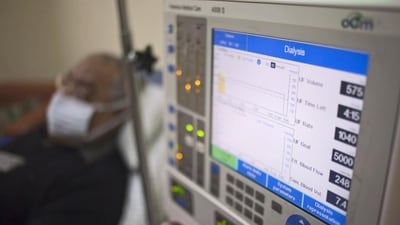
The primary impact we see with IoT is when patients are able to avoid visiting hospitals – devices that allow patients to be screened at their location and share diagnostic data with physicians, eliminating the need for physical visits. Expected care is provided without burden. This is especially relevant in remote areas where there are no hospitals nearby and a visit to a doctor can take an entire day, placing severe pressure on the daily wage labourer. While wearable solutions that provide continuous monitoring are useful for everyone, low-cost versions of such solutions are particularly useful in low-resource and remote settings.
Apart from patient use, hospitals also benefit from IoT based devices. For example, continuous monitoring of a newborn baby with data available to the doctor on a mobile phone (thereby eliminating the need for a nurse to check regularly) would allow a doctor to perform routine vital-monitoring without the currently used vital-monitoring devices. Allows monitoring of many more newborns than. The variety of devices being used for fitness and exercise tracking allow users to focus on their physical well-being, preventing them from falling ill altogether and staying healthy longer.
In addition to direct patient involvement, IoT devices are able to improve health care operations by streamlining inventory management, tracking equipment usage, and optimizing hospital workflow. For example, smart tags can instantly locate essential medical equipment, saving time during emergencies.
While IoT devices provide additional monitoring capabilities through their connectivity, AI is starting to play a much larger role, especially in areas such as radiology, oncology, precision medicine, and personalized treatment for complex cases. Today AI models are able to generate high-quality advice by analyzing MRI scans and X-rays, reducing the workload on pathologists and physicians. The AI creates an advisory report for the doctor, indicating any anomalies it finds and focuses their attention on the specific area. Removing humans from the treatment cycle may not be possible or even desirable, but AI advice can certainly make it easier for health care professionals to treat their patients.
Apart from assisting doctors, AI is starting to play a bigger role in identifying molecules for specific drugs. The typical drug discovery cycle for a specific problem, which would start with a large number of molecules, can be shortened when the AI model analyzes those molecules and is able to reduce the initial count to a fraction after doing simulations. This shortens the medication cycle and also leads to savings. Significant cost to pharmaceutical companies.
As we look towards the future, apart from the development of various solutions using IoT and AI separately, we also see strong convergence between IoT and AI leading to solutions where both are playing a key role. When devices are collecting routine data from patients, instead of leaving it solely to the consulting physician, the AI can perform its own analysis and create advisory reports for both patients and physicians. AI can also sound immediate alarms and initiate pre-determined actions like starting an ambulance service, alerting family members, etc. AI integrated with MRI and Diagnosis and treatment begin. AI enabled microscopes can send high resolution images of samples along with advisory reports to remote pathologists who can both view and share recommendations. Such a solution would be especially useful in remote areas where there is a shortage of qualified doctors. ASHA workers can take diagnostic equipment directly to patients in villages and provide on-site diagnosis. The possible scenarios are limitless and will hopefully greatly improve health care delivery.
The development and adoption of these solutions also brings challenges and ethical considerations. Issues like AI hallucinations, access to clinical data for training AI models, data quality and anonymity to protect patients’ privacy, informed consent for data access and regulatory requirements are some of the challenges that AI in healthcare faces. need to be addressed before. Begins to reach your full potential. Ultimately, we want a future where health care is not only smarter but also more connected, personalized, safe, accessible, affordable and sustainable.
This article is written by Sudhanshu Mittal, Head of Technical Solutions and Director, NASSCOM CoE.
[ad_2]

