

[ad_1]
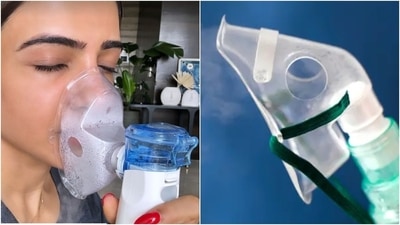
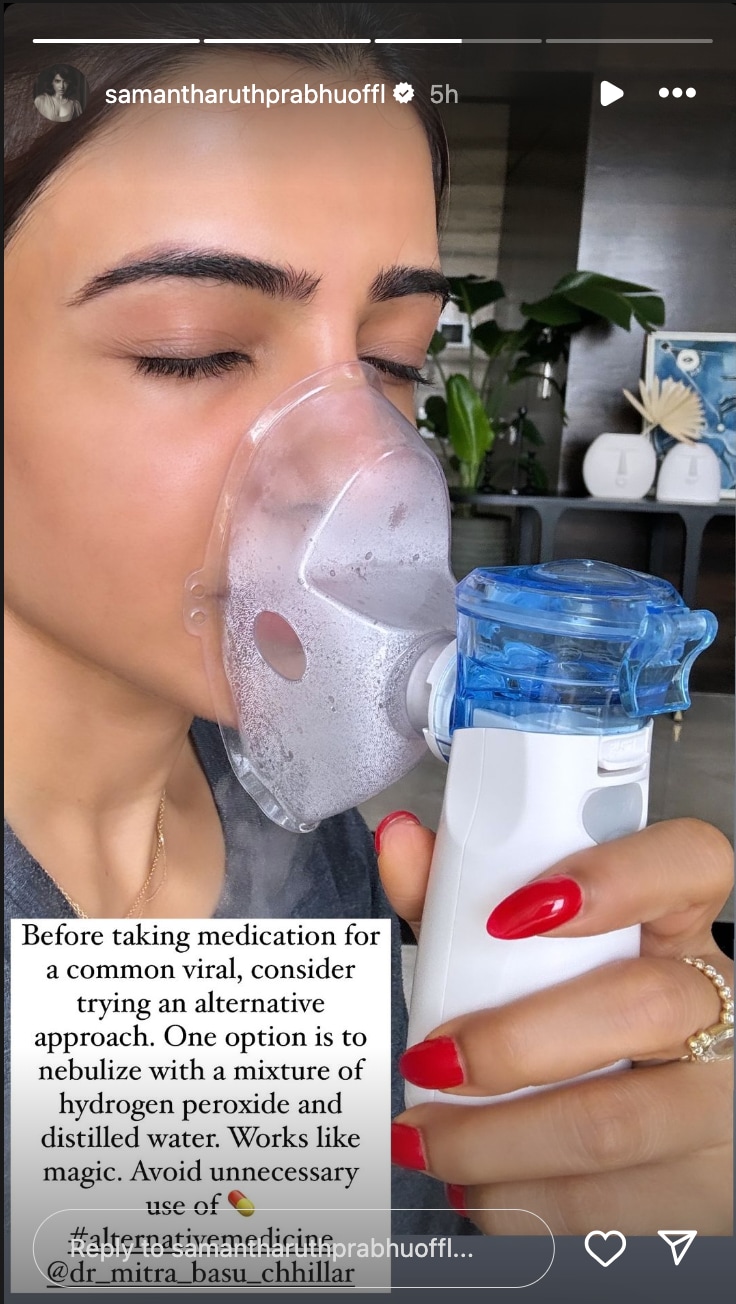
Actress Samantha Ruth Prabhu recently shared a picture of herself trying an alternative approach to viral medication. In the picture shared on her Instagram story, Samantha can be seen taking viral medication with the help of a nebuliser. “Before taking medication for a common viral, consider trying an alternative method. One option is to nebulise with a mixture of hydrogen peroxide and distilled water. It works like magic. Avoid unnecessary use of pills,” Samantha wrote on her story. See the picture here.
Reacting to this, in an interview with HT Lifestyle, Dr Rituja Ugalmugale, Internal Medicine, Wockhardt Hospitals, Mumbai, said, “Hydrogen peroxide (H₂O₂) and distilled water nebulisation have been discussed in various contexts, including home remedies and alternative treatments. However, their safety and potential risks need to be considered from an evidence-based medical perspective.”
ALSO READ: Samantha Ruth Prabhu breaks silence on her health, reveals she has autoimmune condition myositis
Dr. Rituja Ugalmugale also explained the risks of hydrogen peroxide and distilled water. “Both hydrogen peroxide and distilled water nebulization come with potential risks. Hydrogen peroxide is generally not recommended for nebulization due to its potential to cause oxidative stress, mucosal irritation, and other serious respiratory problems. Distilled water, while safer than hydrogen peroxide, can pose risks if used improperly. Normal saline remains the preferred choice for nebulization due to its safety profile and compatibility with the body’s electrolyte balance.”
Also read: 8 must-have health tools at home for health emergencies
Hydrogen Peroxide Nebulization: Safety Concerns
oxidative stress:
Hydrogen peroxide is a strong oxidizing agent. When nebulized and inhaled, it can cause oxidative stress and damage to lung tissue.
Mucous irritation:
Inhaling hydrogen peroxide can irritate the mucous lining of the respiratory tract, causing coughing, throat irritation, and possibly more serious respiratory distress.
Cytotoxicity:
Hydrogen peroxide can be cytotoxic to epithelial cells in the respiratory tract, potentially causing cell death and tissue damage.
Also Read: 5 reasons why steam inhalation can improve your respiratory health
Hydrogen Peroxide Nebulization: Potential Hazards
Acute lung injury:
In severe cases, inhalation of hydrogen peroxide can cause serious lung damage – common symptoms include difficulty breathing, chest pain and wheezing.
Chemical burns:
High concentrations of hydrogen peroxide can cause chemical burns to the respiratory tract, leading to serious damage and complications.
Risk of infection:
Using non-sterile solutions or handling them improperly can introduce germs, which can lead to respiratory infections.
Also read: ‘Health, science illiterate’: ‘Liver doctor’ criticises Samantha Ruth Prabhu for hydrogen peroxide nebulisation post
[ad_2]

